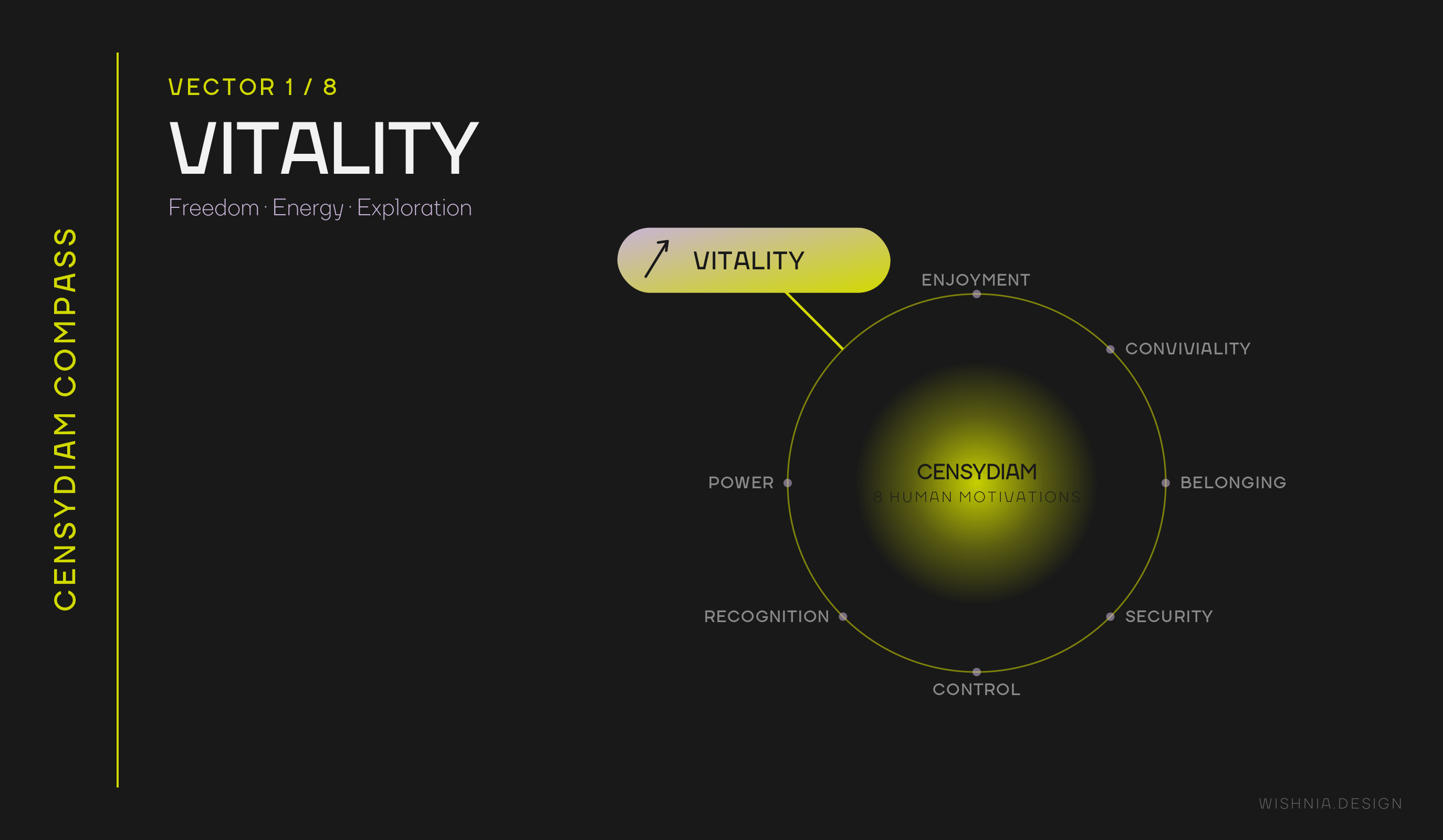
Some brands make you want to breathe deeper. They're not selling a product — they're selling the feeling that you only get one life, and it should be lived vividly. This is the territory of the Vitality vector — one of the eight motivational poles of the Censydiam compass.
At its core is the need to feel alive: to explore the limits of what's possible, to move, to take risks, to discover something new. It's not adrenaline for its own sake — it's energy as a state of being, the opposite of routine, stagnation, and caution.
«Я хочу исследовать свои собственные возможности, жить полной и яркой жизнью, чувствовать себя активным».
Who speaks this language
Land Rover, Virgin, Red Bull, Nike, Dove, GoPro — different categories, the same emotional territory. “Just do it” and “gives you wings” aren't slogans about a product — they're an invitation to act. Here, the brand isn't an advisor or a protector, but an ally in moving forward.
How it shows up in design
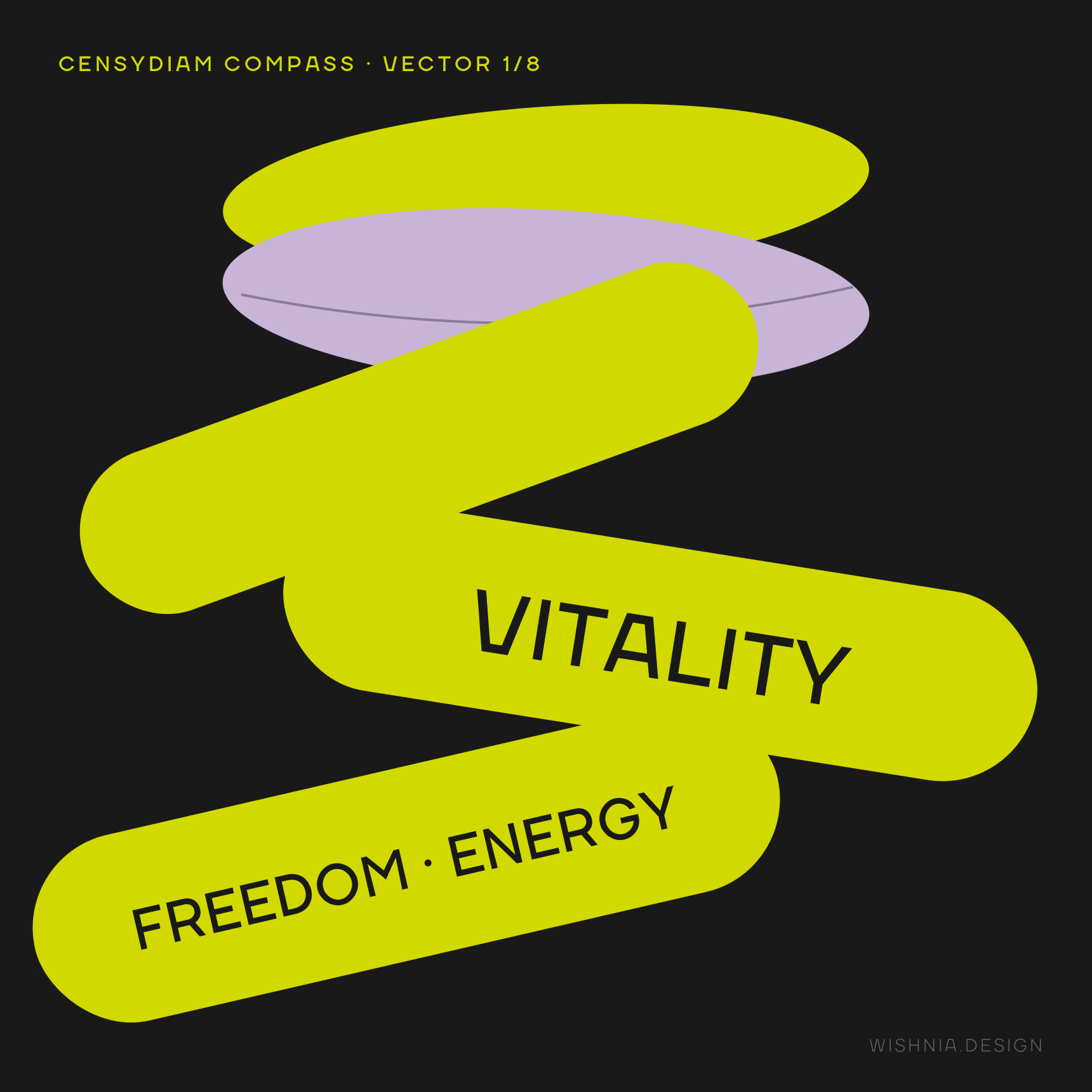
Visually, the vitality vector is almost always about motion: diagonal compositions, unfinished frames, a sense of movement even in a still image. The tone of voice is direct, short, imperative — with minimal hedging. Soft half-tones and apologetic phrasing have no place here; the energy belongs to the verb.
When this vector is the right choice
If your product is tied to sport, active recreation, adventure travel, off-road vehicles, energy drinks, or fitness technology, the vitality vector can become the core of your positioning. But it demands courage: the brand has to be willing to provoke, not lull its audience to sleep.If the answer comes up empty, the vector was chosen incorrectly or executed only on the surface. Vitality doesn't tolerate half-measures: either the brand energizes, or it's simply describing a product.
Задумайтесь: как бренд мотивирует человека, заряжает его энергией и выводит за рамки привычного?