

It's tempting to think that creative ideas simply strike — a flash of talent, a burst of inspiration, or plain luck. And when the idea doesn't come, all that's left is to wait for the right mood. Oleksandr Trehub — designer, entrepreneur, and co-founder of Projector Institute, and author of the book The Kazan Method — offers a different view: creativity isn't magic, and it isn't reserved for people in certain professions. It's a system of thinking that can be trained.
To explain how it works, Trehub compares the creative process to cooking soup. A good result needs ingredients, a pot (kazan, in Ukrainian and several other languages), fire, mixing, and a clear sense of the flavor you're after. Hence the name: the Kazan Method.
A person can follow a script that's already written: get an education, choose a recognizable profession, and move along a route others have laid out before. Or a person can decide, on their own terms, where to go and how to bring their own ideas to life.Living creatively doesn't mean becoming an artist, a designer, or a musician. A teacher, an entrepreneur, an analyst, an engineer, or a manager can just as easily look for new solutions, question familiar approaches, and build something in their own way.So it isn't the profession that's creative or uncreative — it's a person's relationship to their work and their life. Room for creativity exists almost everywhere. The only question is whether we notice it, and whether we're willing to take responsibility for our own decisions.
The method describes four interconnected layers of the creative process: ingredients, fire, mixing, and the ideal solution.
Our creative ingredients include:
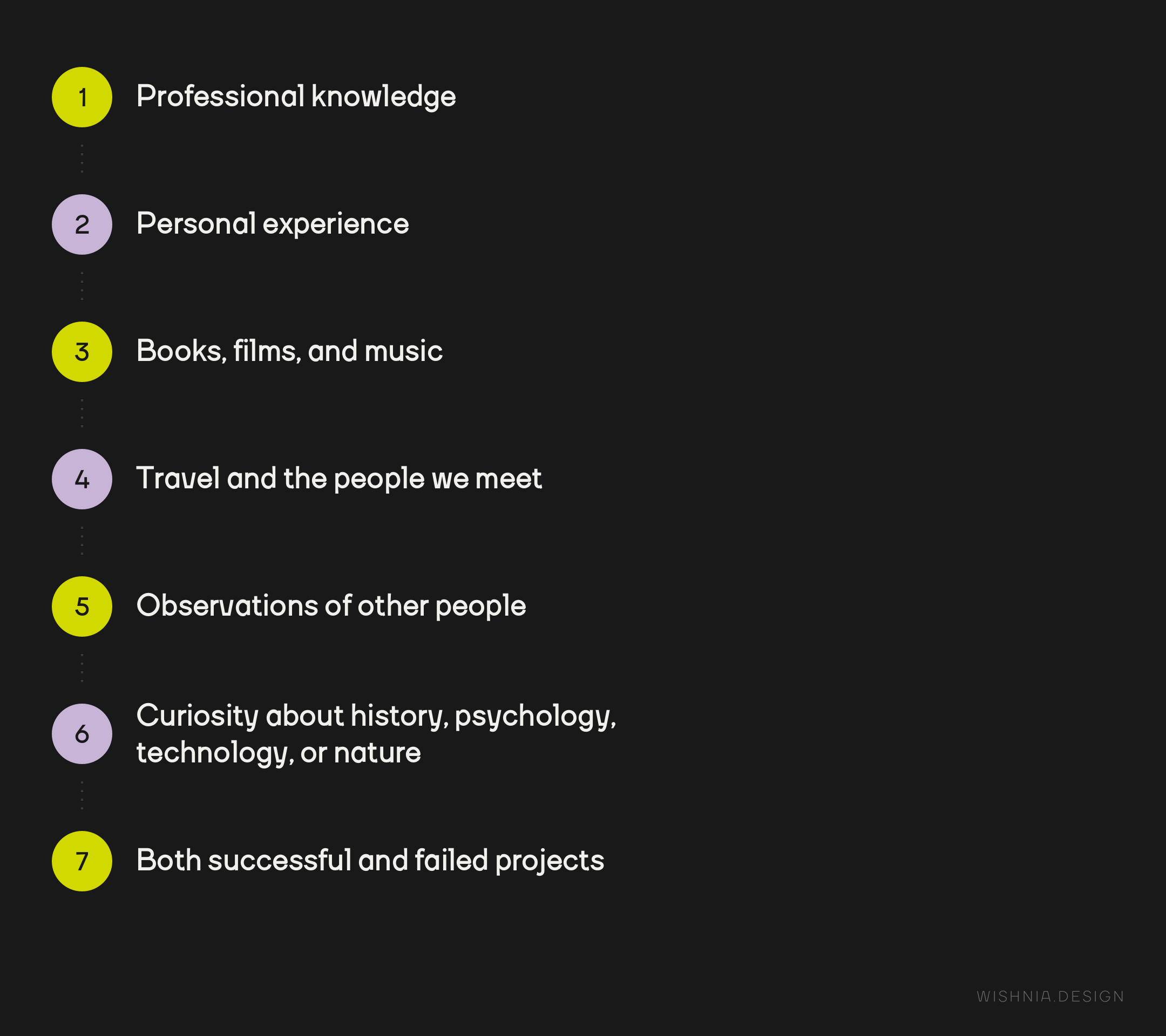
The more varied the contents of your inner "pot," the more interesting the possible combinations. If every designer is looking at the same projects on Behance and Pinterest, their output inevitably starts to look the same. But if one of them is also drawn to architecture, theater, anthropology, or electronic music, connections start showing up in their work that nobody else's work has.
Curiosity that has nothing directly to do with your profession isn't a wasteful distraction — it's a strategic way of restocking your own supply of ideas.
You can gather beautiful ingredients, but without fire they just sit there, separate. In the creative process, fire is played by energy, motivation, and the conditions that push us to act.
Fire can be internal — when an idea is so absorbing that you want to work on it for hours. But that internal resource isn't infinite. Sustain maximum intensity for too long without leaving room to recover, and the contents of the pot start to burn. That's how burnout happens.
There's external fire too: deadlines, a limited budget, a small team, or the need to make a decision by a certain date. Constraints are often seen as obstacles to creativity, but they're exactly what helps us focus and cut away the unnecessary.
Fire that's too weak never gets the process going. Fire that's too strong burns through your energy. The task, then, isn't to work at full intensity all the time — it's to find the right intensity: alternating focus with rest, action with observation, active work with the quieter periods when the brain is free to connect everything it has absorbed.
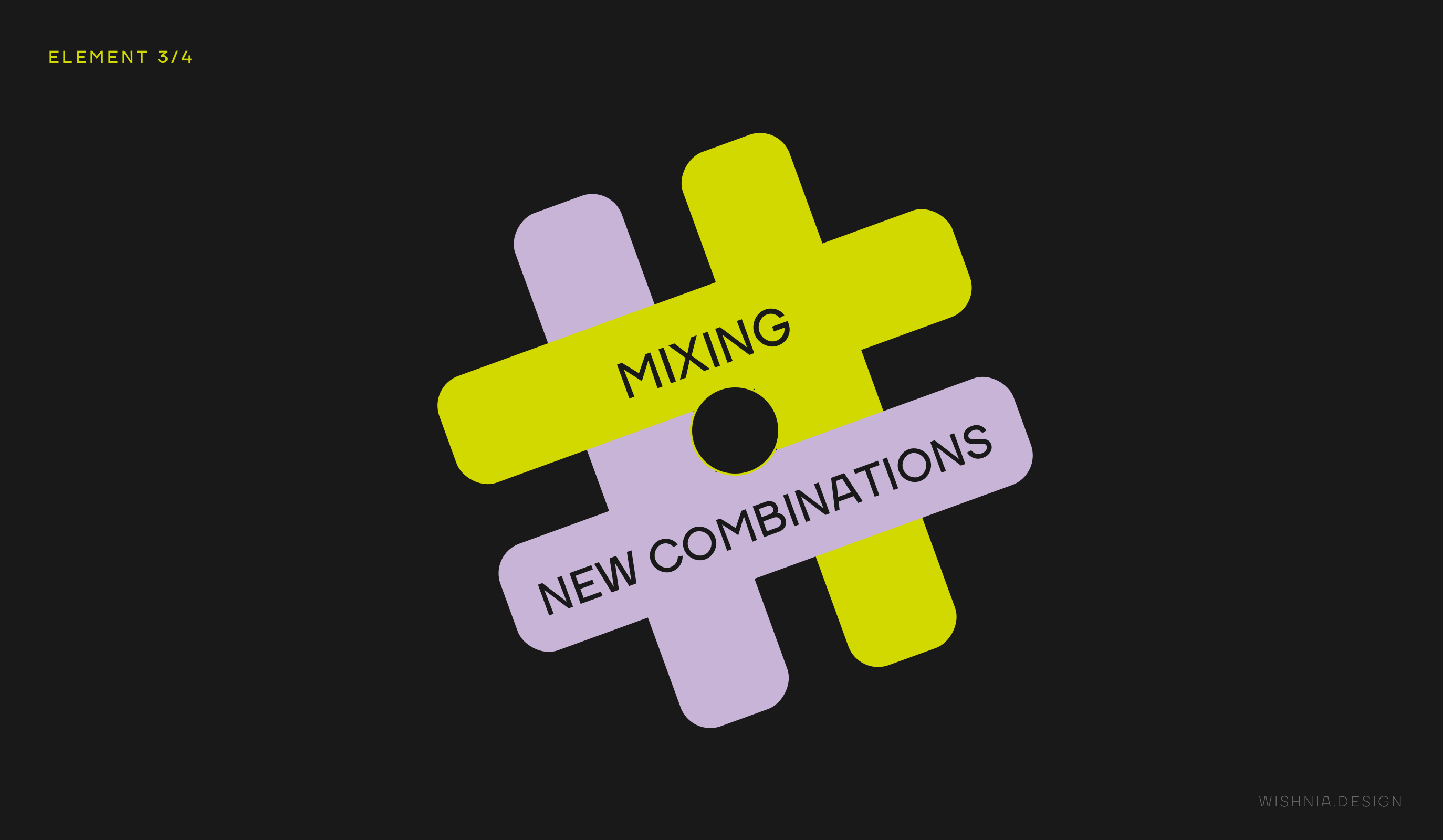
Knowledge on its own doesn't make a person creative. What matters is learning to mix elements that, at first glance, have nothing to do with each other.In the Kazan Method, creativity is understood as remix. Most strong ideas don't build a world from scratch — they combine things that already exist into a new configuration. It's the unusual combination of familiar elements that produces a result that didn't exist before.
This view frees you from the fear of the blank page. You don't need to invent something humanity has never encountered. It's far more productive to ask:
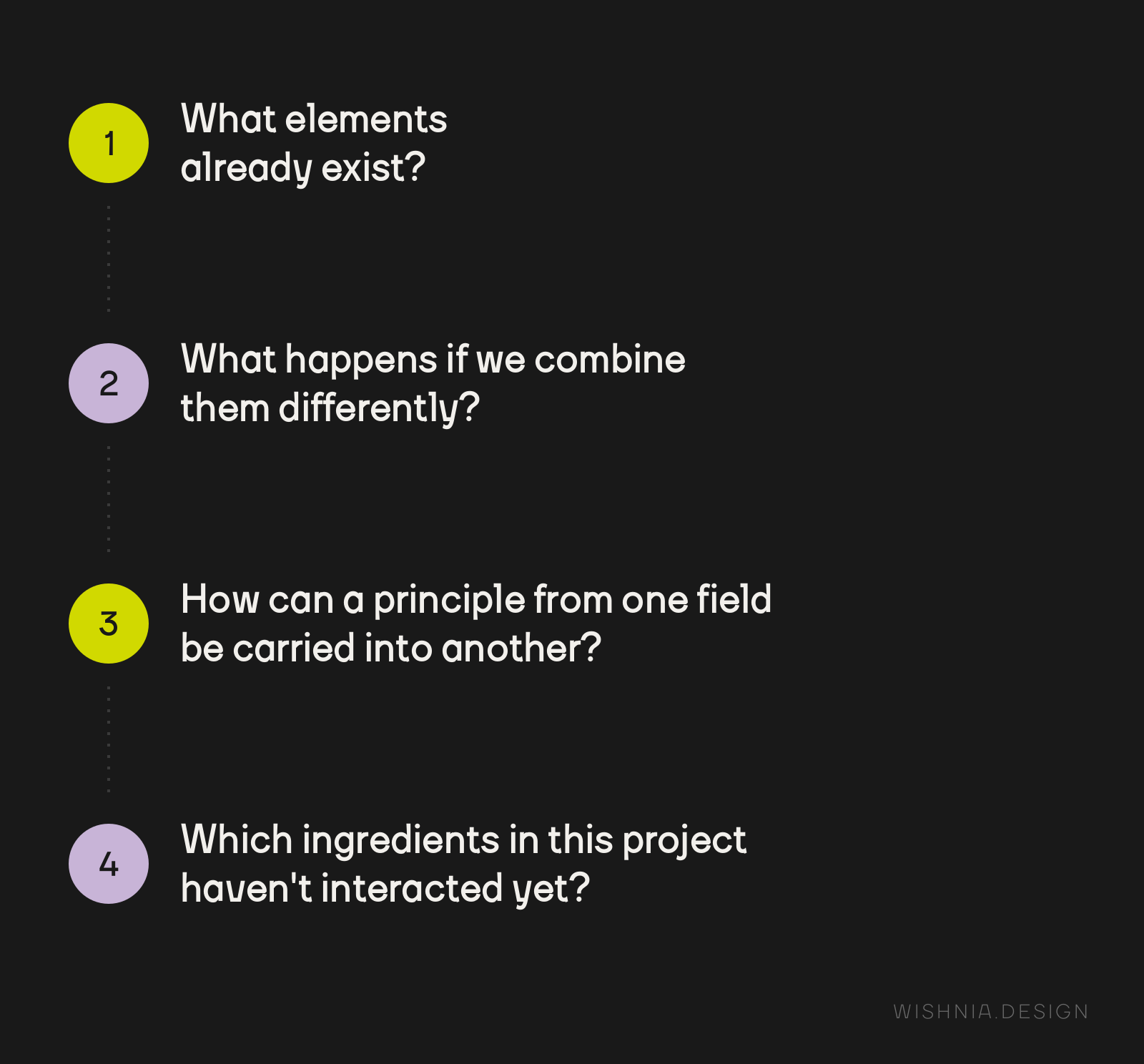
Creativity doesn't start with a demand to "come up with something brilliant." It starts with a willingness to experiment with combinations.
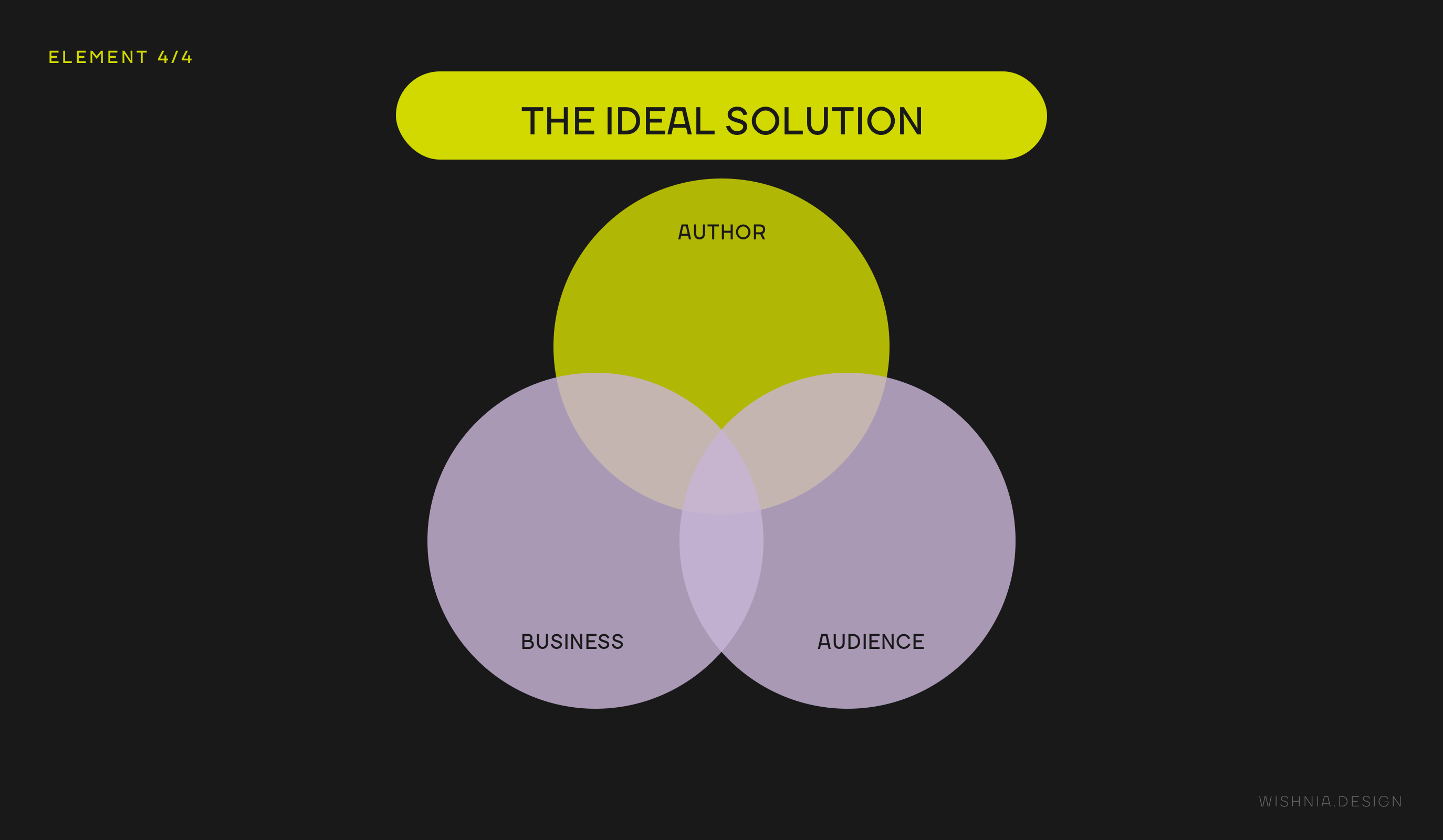
Having an unusual idea doesn't mean it solves the problem at hand. To evaluate a result, the Kazan Method proposes a model of three overlapping circles:
The author
Does the solution match our taste, values, and professional vision?
The business
Does it help reach the stated goal, and does it make economic sense?
The audience
Do people understand it, and does it create real value for them?
A strong solution sits at the point where all three circles overlap.
Consider only the author's opinion, and a project can turn into self-expression disconnected from the client's actual task. Focus purely on the business, and the result risks becoming predictable and stripped of personality. Try only to please the audience, and you may end up with something popular but shallow — a rehash of already-familiar templates.
One particularly important principle of the method: don't confuse creativity with stubbornness. When the author starts loving their own idea more than the problem it's meant to solve, the creative search stops. A professional defends the quality of the result — not a concept they've fallen in love with.
Artificial intelligence can be pictured as an extremely powerful mixer with an enormous supply of available ingredients. It analyzes information quickly, generates options, and combines elements at a scale no single person can match.
But speed of generation is no guarantee of quality. Taste, empathy, intuition, and an understanding of context remain squarely human — the ability to sense which solution is genuinely appropriate, who needs it, and why it's being made at all.
So the productive formula isn't "AI does it instead of me" — it's "I create together with AI." The more powerful the tools become, the more important it is to develop your own taste and your ability to select the best from what's generated.
The author identifies three natural stages of professional development.
In the first stage,
a person copies strong examples. This isn't a sign of missing talent — it's a normal way to learn and build up experience.
In the second stage,
they start to understand the principles and patterns behind good work. They're no longer repeating a specific example — they're operating from familiar models.
In the third stage,
a voice of their own takes shape. The person stops constantly asking how others have done it and starts looking for their own way to solve the problem. At this point, endlessly browsing references can stop helping and start getting in the way — steering thinking down routes that are already well-worn.
A personal style doesn't emerge from a deliberate attempt to be different from everyone else. It's the natural result of a unique combination of accumulated knowledge, experience, interests, and one's own view of the world.
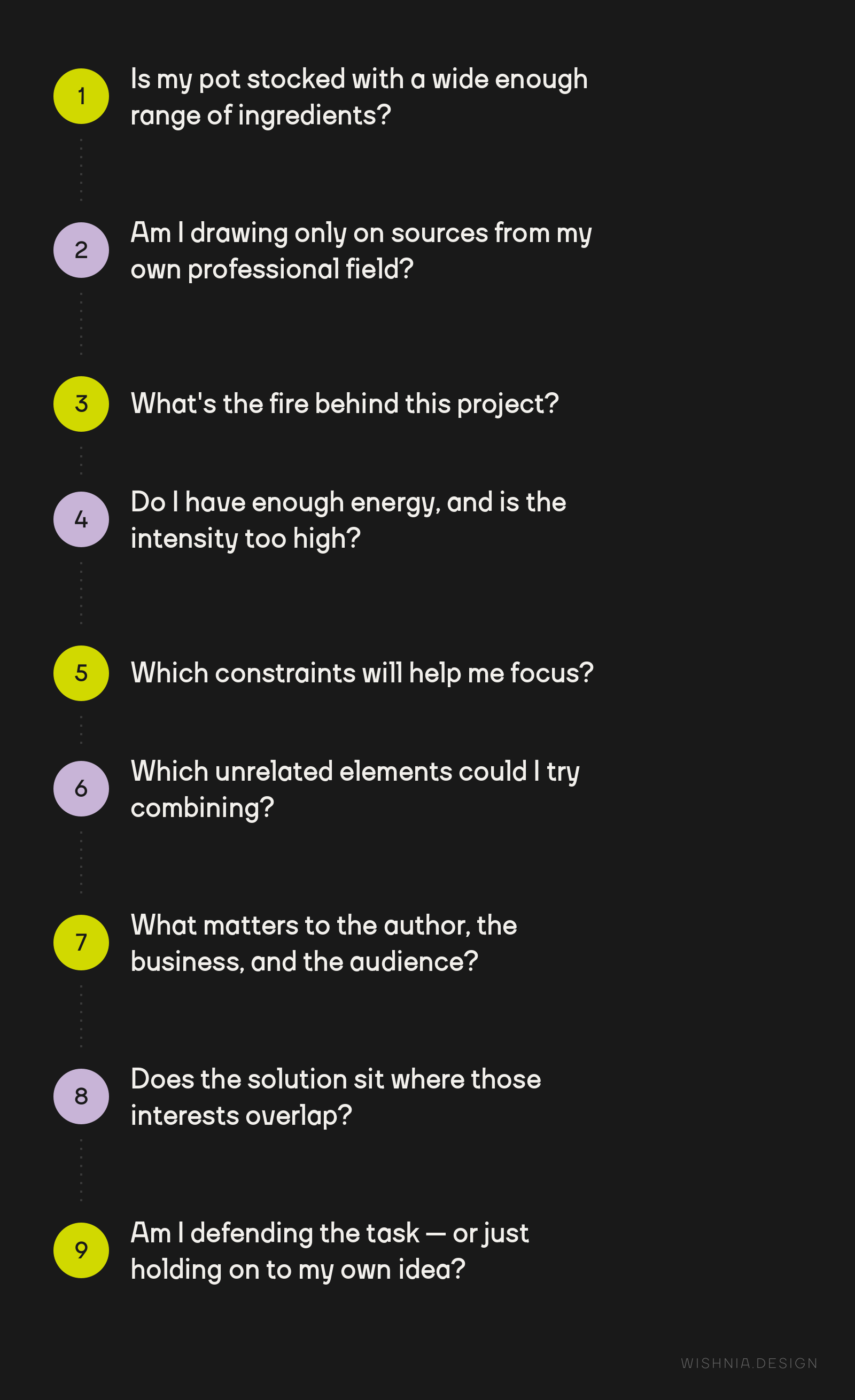
Before starting a new project, it's worth asking yourself a few questions:
Метод Казана не обещает автоматического появления блестящих идей. Он создает условия, в которых вероятность появления удачного решения возрастает. Вместо пассивного ожидания вдохновения вы учитесь собирать материал, поддерживать необходимый уровень энергии, экспериментировать с комбинациями и оценивать результат со спокойной головой.
Основная идея метода проста: креативность — это не редкий дар, а образ жизни, восприятия и действия. Чем вдумчивее мы наполняем свой собственный сосуд и чем смелее смешиваем его содержимое, тем больше решений становится возможным — решений, которые невозможно получить с помощью готового рецепта.
This article is based on Trehub's book "The Kazan Method" and materials from Projector Institute.